
Postal Service sued for seizing Black Lives Matter masks during 2020 protests
- mrsalex05061
- Jun 2, 2022
- 4 min read
Updated: Jun 15, 2022
The US Postal Service seized masks that read "Stop killing Black people" and "Defund police" meant to protect protesters from COVID-19.

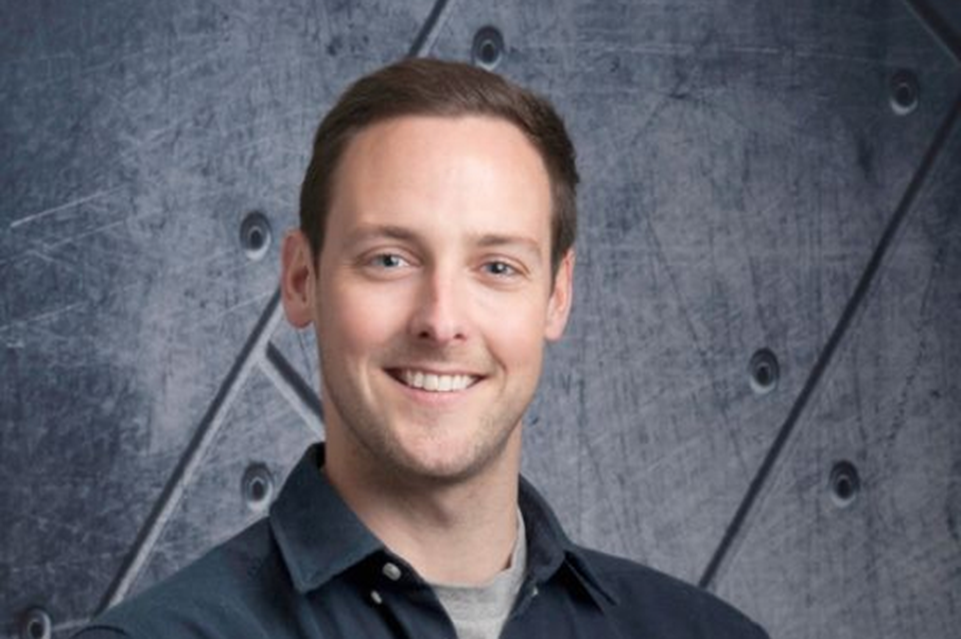
Movement Ink owner René Quiñonez wears one of his masks.
A California screen printer is suing the US Postal Service for seizing shipments of Black Lives Matter masks intended to protect demonstrators from COVID-19 during protests following the May 2020 murder of George Floyd.
The cloth masks, with slogans like "Stop killing Black people" and "Defund police," were bought by the Movement for Black Lives and were meant to be shipped to DC, St. Louis, New York City and Minneapolis, where a police officer killed Floyd. But four boxes holding about five hundred masks were marked as "Seized by law enforcement", and their shipment was delayed more than 24 hours.
The lawsuit, filed on Wednesday, accuses US Postal Service and US Postal Inspection Service officials of violating constitutional rights under the Fourth Amendment by improperly seizing the boxes without probable cause, a warrant, or even reasonable suspicion. The lawsuit also raises the possibility that officials violated the First Amendment by taking the masks because of their political messaging.
Movement Ink owner René Quiñonez, who owns the screen-printing business in Oakland, California, which manufactured the masks, told NBC News that his small family business had been affected by the seizure.
"For us as an organisation, as a company, and as part of our community, we intended to support the many activities that were going on across the country," Quiñonez told NBC News.
Quiñonez, his family, and at least a dozen employees and volunteers "worked around the clock" to produce and pack the masks in the first week of June 2020, according to the lawsuit filed on his behalf by the Institute for Justice, a libertarian-leaning non-profit law firm.

René Quiñonez owns Movement Ink in Oakland, California.
The lawsuit states that Movement Ink carved out a niche by building relationships "with activist movements, organisations, non-profits, and individual organisers, who relied on René and Movement Ink for various screen-printing needs."
In an interview, Quiñonez said he had a positive relationship with US Postal Service employees, who knew he often mailed out clothing items with expedited shipping. He said those relationships went cold after his items were seized, as did some of his business relationships with activists.
"When there's an organisation or a company that now has a reputation for being a law enforcement target, people don't want to do business with them," Quiñonez said. "Even the people that are like-minded, that know that there are fundamental flaws in how we address things, they need to protect their interests. So, we lost business."
The lawsuit states that the seizure of the masks “created a pall of suspicion, distraction, uncertainty, and confusion around René and Movement Ink,” the lawsuit states. The “baseless seizures and searches,” the lawsuit states, caused significant emotional and mental distress “not just because of his and Movement Ink’s financial and reputational hits, but because he and Movement Ink have been effectively shut out of a movement and a community that they spent and continue to spend years investing their time and energy in.”
“Instead of focusing on printing and shipping political COVID-19-protective masks and other apparel, René and Movement Ink had to waste time figuring out why their innocuous packages were in the hands of law enforcement and how to get them released while also fielding questions, concerns, and even accusations from partners, community members, and social media commenters,” the lawsuit reads. “René, Movement Ink, and their partners were left wondering why these Covid- protective political masks were in the hands of law enforcement officials instead of on the faces of political protestors.”
The Postal Service did not at once respond to a request for comment.
In a letter to Rep. Barbara Lee in June 2020, the Postal Service claimed that the parcels "were detained solely because the external physical characteristics of the parcels were consistent with parcels in other non-related instances that were confirmed to contain nonmailable matter, specifically controlled substances."
But the lawsuit claims that the "neatly taped, nondescript brown boxes" had clear labels, a category that includes "millions of packages shipped around the country every day." The lawsuit states that internal notes said that the boxes held "BLM MASKS," although it is not clear when that note was added, whether it was when the masks were seized or after media reports on the seizure of the shows.
"It is not clear whether Defendants knew that the packages contained - in Defendants’ words - 'BLM MASKS' before seizing the packages," the lawsuit states. "If Defendants knew that the packages contained - in Defendants’ words - 'BLM MASKS' before seizing the packages, Defendants violated the First Amendment by seizing packages because of their political messages."
The seizure of Black Lives Matter masks came in the chaotic weeks after Floyd's death and days after police violently cleared protesters out of the area surrounding the White House and former President Donald Trump posed for photos with a Bible. Attorney General William Barr had vowed a crackdown on rioters and even called in officers from the Bureau of Prisons to DC, who fired pepper balls at demonstrators.
During the Trump administration, federal prosecutors took an aggressive approach to demonstrations, even bringing a case against a band member after he posted professionally shot promotional images of himself posing in front of a police vehicle with a fake Molotov cocktail.
Quiñonez hopes that Americans will be concerned about the seizure of the masks regardless of their political beliefs.
"The fact that our government can just seize private property - either because of general suspicion or because they know its political commentary - that's a scary reality that we live in," Quiñonez said.


Comments