
1,000 calls a week into Birmingham social services as alarm raised on child abuse
- mrsalex05061
- Jun 1, 2022
- 7 min read
Updated: Jun 15, 2022
Stories about the tragic lives and deaths of Arthur Labinjo-Hughes, Hakeem Hussain and Kemarni Watson Darby may have contributed to record levels of reports.

Failed children Star Hobson from Bradford, Hakeem Hussain from Birmingham, and Arthur Labinjo Hughes from Solihull
The number of calls into child social services in Birmingham is now at record levels, with more than 1,000 contacts every week from schools, health professionals and the public. Children's Trust chief executive Andy Couldrick said the service was under immense pressure but coping as it battles to keep youngsters safe and support families in crisis.
He said that social workers, with around twenty cases on their books at a time, are showing extraordinary resilience to support families already on their radar while investigating new reports. He said that millions more in funds to increase and keep the workforce needed to prevent families from slipping into chaos would make a positive difference.
"We are currently getting around 1,000 contacts a week, with about 20% repeat contacts or referrals (calls about the same child or family)," said Mr Couldrick. Many are seeking support for their own family, he added.
The contact levels have been slowly rising for some time as professionals, relatives, and neighbours seek advice and support and, in some cases, urgent intervention. The recent shocking and high-profile local cases of little Arthur Labinjo-Hughes, Hakeem Hussain and Kemarni Watson Darby will undoubtedly have played a part in more coming forward.
All three youngsters died because of failings by their parents - in the cases of Arthur and Kemarni, the people who murdered them meant to be looking after them, while Hakeem was killed because of his drug addict mother's negligence. But in each of those tragic cases, alarms were raised, or there were missed opportunities to intervene.
Said Mr Couldrick: "Cases like Arthur, Hakeem, and little Star (a child murdered in Bradford) are relatively rare and sadly have always existed. No system can be completely safe. But such awful cases of child torture and murder make headlines because they happened in ordinary domestic settings, under the noses of neighbours and professionals, and when there were chances to avert tragedy.
"We are getting more contacts and referrals than we have ever had, from various sources, from schools and family members. This is good as it means we are alert to the family's issues.
"There are crucial elements that drive concerns, and the most prominent is domestic abuse. Children seeing and being on the receiving end of domestic abuse is a huge concern. Then there are concerns about older young people. Parents often raise concerns about risks of harm outside the home and safeguarding concerns linked to gangs, youth violence or other forms of exploitation.
"Sometimes contact with us will be about something that is noticeably clear information that we can act on quickly - for example, when a child says something to a teacher which triggers a concern. It is often more nebulous, like a neighbour raising a concern about a child or parent."
"In a case like that, we would look at whether we have had any previous dealings with that family, compare notes with other partners, including the police or education, speak to experts in domestic abuse, or anything else relevant before we determine what we should do.
"Sometimes what we do is to arrange an assessment of the situation; in some cases, we will set up a strategy meeting bringing together police, social workers, health and education to share information and agree on a plan for immediate investigation.
"In some cases, of course, we will take immediate action because there is a requirement to safeguard a child at once. We can apply for an urgent court order, while the police can take a child into police protection. But more commonly, we will be going out to begin understanding what is happening and what needs to be done to support the family, always to safeguard the child.
"We are currently working with around 13,000 families across the city, and in the vast majority, we are working to help those families to continue to look after their children. Despite our image as “child snatchers,” we do that exceedingly rare compared to the time we spend helping families look after their children well. "
BirminghamLive asked if social workers are sometimes “too trusting” of parents and don't remove children often enough – as, in the case of Hakeem Hussain, his addict mother believed to be off drugs when she was not. Arthur Labinjo-Hughes, whose bruises were overlooked, and his father was deemed his “protector” when he proved to be anything but.
Mr Couldrick added: "This dilemma exemplifies why social work is such a hard job. We are asking social workers to work out which parents, despite challenges, can be supported to look after their children well enough and which are not, often in a short timescale.
"When we get it right, in most cases, nobody hears about it. Nobody hears about the children who successfully continue to live safely within their family, nor about the children who come into foster care at the right time, are well cared for and go on to be adopted. Those stories do not attract any attention.
"Children who grow up in chaotic families, with parents who misuse drugs or alcohol, or even who grow up being abused in their families, will often say to us that what they want is for those things to stop, for the behaviour to change, not that they don’t want to be with their parents.
"It must be right that society tries to help parents change their behaviour before we say, “this is not good enough, and we have to do something different.” Going into care can be the right thing for some children, and it changes many lives for the better. We have young people working in our trust who grew up in the care system who are fantastic examples of that.
"But for some, care is not the right place for them. We all want the perfect system that always has the right children in the right part of the support system for the right length of time for the right reasons. We aspire to that, and having the right resources helps that."
A recent independent review of child social care, called the Macalister review, concluded that a significant overhaul of social services and a massive injection of cash was needed, with a greater focus on early years care and family support. The national review into the deaths of Arthur and Star Hobson from Bradford, also published this month, reached similar conclusions.
Mr Couldrick said the change was inevitable and welcomed. As a new trust formed just four years ago, he said he hoped to get the opportunity to contribute to what the new ways of working should look like and implement reform.
"Reform will be disruptive, but if it leads to the investment of resources and capacity into services that are better at supporting families, then I would be delighted to see that."
A key focus would be encouraging more 'kinship care', where members of the wider family or close friends take on caring responsibilities if parents struggle to do so.
"If, as parents, we were unable to look after our kids, we would hope to be quite a long way from the public care system. We would look to grandparents, siblings, and close family friends to step in first.
"That ought not to be so different for many of the families we work with - those children have aunts and uncles, grandparents, cousins and family friends who, if supported and encouraged the right way, could offer a home to them, so they grow up connected to their wider family. They will still be there long after the State as a parent has packed up and gone home. We need to do more to support people in those circumstances."
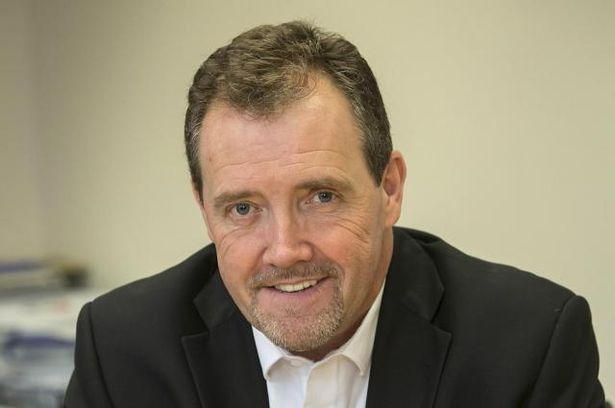
Andy Couldrick
He added: "We also need to create a workforce sufficient for us to ensure social workers have few enough cases (to manage) that they can give the time every family needs, to properly understand what is going on for that family, what the chances of change and improvement are, and what is in the best interests of that child.
"We have not always got it right, though the evidence shows that our system is as safe as any in the western world, which doesn’t mean we should not constantly strive to make it safer."
Funding was also vital. "We have had years of reduced spending on public services in Birmingham, and children’s social care has never been protected for funding like the NHS or education. So increasingly preventive family support has been denuded," he said.
That means issues that could be addressed early on in a child's life go unchecked. "We spend vast sums of money at the wrong end (when children need to be taken into care - a hugely costly process). We want to help more families early on, and that will see fewer children coming into consideration.
"Through building our early years’ service and our EmpowerU service to support and divert children at risk of exploitation, we have tried to do several things already, but we cannot do all that we need to without investment."
Edgbaston MP Preet Kaur Gill, a former social services manager, said she had seen first-hand the impact of rising caseloads on relatives still working in the service, battling to ensure every family gets the support needed.
"Funding has been devastated, and that needs to improve, and it is time we had a radical rethink of what child protection should look like. What we need is more early years support, more programmes to help parents and more positive interventions to support children and young people," she added.
Mr Couldrick said he hoped a future Ofsted inspection of the children's trust - due any time - would conclude that it is continuing its improvement journey since taking over a failing children's service from Birmingham City Council.
"I hope they will find a stronger trust than we have ever been," he said. Children's services had been considered inadequate for a decade until the children's trust was set up - it is now rated “requires improvement to be good” with a clear action plan in place.


Comments